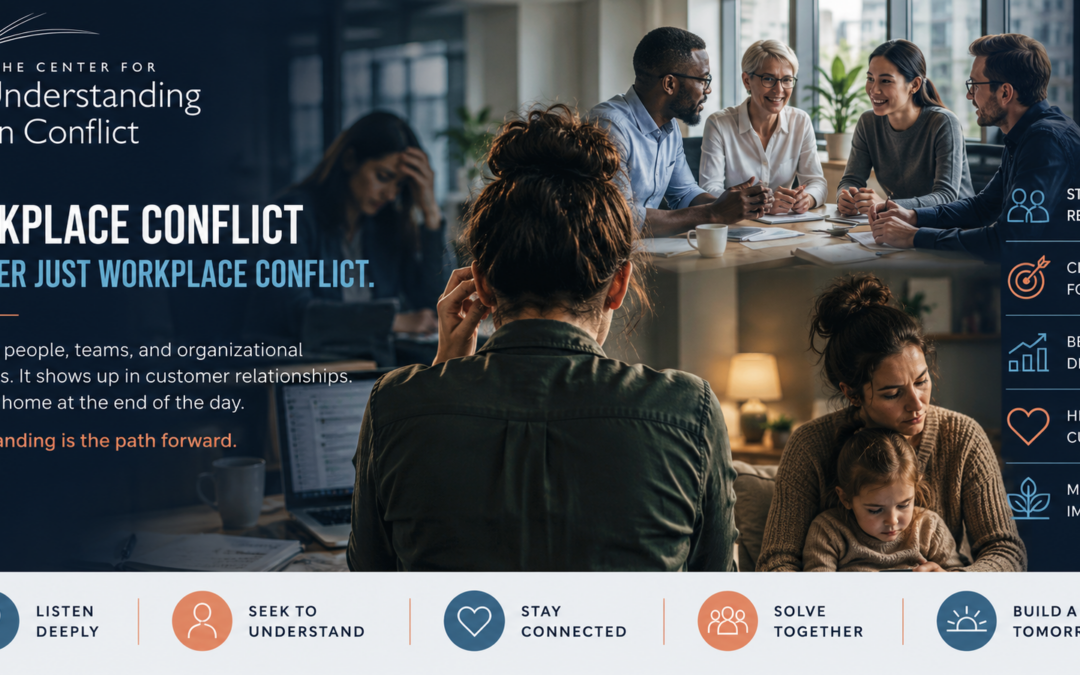
Conflict at work is often described in operational terms: a breakdown in communication, a stalled project, a difficult employee, a strained team, a missed objective. Those descriptions are not wrong, but they are incomplete. Conflict is not simply a problem to be managed. It is an experience people carry in their bodies, relationships, judgment, and sense of belonging.
Most people spend a significant part of their waking lives at work. They bring focus, commitment, creativity, ambition, care, and, often, a real desire to contribute. When conflict enters that space, it does more than interrupt a meeting or complicate a workflow. It can change how people listen, how they interpret one another’s intentions, how willing they are to take risks, and how safe they feel being honest.
In a small office, conflict may show up as silence after a tense exchange, side conversations, avoidance, or a sense that everyone is working around the real issue. In a larger organization, it may be harder to see, but no less costly. It can move through layers of leadership, departments, reporting structures, and customer-facing teams. Decisions become slower. Trust becomes thinner. People begin protecting themselves instead of solving problems together.
The effects reach beyond internal culture. Customers and clients often feel what an organization has not addressed. They may not know the backstory, but they can sense confusion, inconsistency, defensiveness, or disengagement. A team caught in unresolved conflict may still be talented and hardworking, but its energy is divided. Some goes toward the mission. Some goes toward managing tension, anticipating reactions, choosing words carefully, and trying not to make things worse.
That divided energy matters. Conflict clouds judgment. It narrows perspective. It can make sincere people sound rigid, careful people seem withholding, and passionate people appear difficult. Under pressure, people often become less curious and more certain. They argue for positions rather than share what matters underneath them. The work may continue, but the quality of attention changes.
And then people go home.
They leave the office, close the laptop, or end the last call, but the conflict often comes with them. It appears at dinner, in sleep, in patience with children, in connection with a partner, in anxiety when the day replays itself. Workplace conflict is not contained by business hours. It can affect health, confidence, identity, and whether one’s life feels meaningful.
An understanding-based perspective begins with this recognition: conflict is human because people are human. The goal is not to eliminate disagreement or pretend every tension can be easily resolved. Healthy organizations need difference. They need candor, challenge, accountability, and change. But they also need ways to stay connected when disagreement becomes difficult.
This means slowing down enough to understand not only what people are asking for, but why it matters to them. It means noticing the stories people are telling themselves about one another. It means creating room for people to speak more honestly, listen more carefully, and recover shared purposes buried beneath frustration.
When conflict is approached this way, it becomes more than a disruption. It becomes a signal. Something important needs attention. A relationship, a process, a decision, a value, a fear, or an unmet need has surfaced. Addressed thoughtfully, conflict can clarify priorities, strengthen trust, and improve decisions. Ignored or mishandled, it can erode the people and purposes an organization depends on.
Work is not separate from life. It is one of the main places life happens. How we meet conflict there matters, not only for productivity and performance, but for the human beings who give their time, skill, and hope to the work.
If you would like an introduction to understanding workplace conflict, consider partnering with the Center to support you this August.