
Self-Reflection for Conflict Professionals Intensive (SCPI) 2026


Why This Training
In high-stakes conversations, our training and skills matter, but so does our inner experience. Reactivity, judgment, insecurity, anger, or the pull toward control can quietly shape our presence and our choices. SCPI offers a structured, supportive container to notice what is happening inside, understand it with compassion, and work with it in ways that increase clarity, steadiness, and connection. Over time, this kind of practice becomes both a professional resource and a way to sustain ourselves in the work.
Who Should Attend
SCPI is for anyone whose work includes helping people navigate conflict, including mediators, HR professionals, team leaders, volunteer coordinators, ombudspersons, lawyers, and mental health, financial, and fiduciary professionals, as well as others in similar roles. Participants may be previously trained in or connected to the CUC understanding-based model, but it is not required. This program is a fit for people who want a deeper relationship with their own inner experience and who are willing to commit to consistent practice between sessions.
Why It Matters
Clients experience our presence as much as they experience our words. When we can recognize what is happening inside us and work with it skillfully, we become more trustworthy, more responsive, and more effective in complex human situations. SCPI supports deeper listening, steadier engagement across difference, and more durable client relationships. It also supports the long-term sustainability of conflict work by helping professionals reduce burnout and bring more of themselves to the work with clarity and care.
Learning Outcomes
- Learn about compassionately connecting with and understanding, in the context of our various histories, positions, and intersections, our deeper impulses fueling our commitment to working with people in conflict.
- Recognize barriers to self-understanding and constructive presence, such as general reactivity, judgment, insecurity, anger, or the desire for control.
- Work with those barriers in ways that bring us closer to ourselves and our clients.
- Explore SCPI concepts and skills through the specific experiences of cohort participants.
- Discuss how to integrate inner experience and external action.
Format & Details
- April 17th
- May 8th
- June 12th
- August 28th
- October 2nd
- October 30th
All dates are Fridays.
Participants will practice various self-reflection methods during six group online sessions over five months (approximately 1 three hour group session monthly) and in-between sessions individually (daily) and 1-1 peer meetings (weekly); with a break in sessions during the summer.
Cost
The cost will be $750 per participant for the 5-month program.
Participants will also need to access for themselves:
- A copy of Inside Out: How Conflict Professionals Can Use Self-Reflection to Help Their Clients, by Gary Friedman. Paper copies are available for purchase through online stores for approximately $35 – 55.
- Your own self-selected or crafted paper journal for use throughout the program.
About the Center
The Center for Understanding in Conflict pioneered understanding-based mediation and is one of the first and only nonprofit conflict resolution training organizations worldwide.
Since 1982, the Center has trained more than 10,000 professionals worldwide, including leaders from the Harvard Law School Program on Negotiation, Intel Corporation, Roche, SAP and the World Intellectual Property Organization. Our approach is rooted in real-world practice, human connection, and the belief that conflict can be a doorway to transformation.
Trainers
 Heba Nimr has worked in various capacities for more than 30 years with families and organizations challenging systemic barriers to equity, as well as navigating interpersonal conflicts and abuse. Heba brings and builds on those experiences in her current practice, based in Oakland for ten years and counting, as a lawyer and mediator focused primarily in the areas of family law, and life, legacy and death planning. She has particular strength and interest in conflict resolution in multicultural and multilingual settings.
 Hansa Patel is an attorney, mediator, and teacher. As an attorney, Hansa zealously advocated for abused and neglected children or defended their parents’ rights in the San Francisco juvenile dependency court for fourteen years. Hansa is passionate about serving the underprivileged community. Feeling depleted by the court system, Hansa explored new ways to empower her clients to resolve conflict. Mediation empowers Hansa’s clients to choose how they want to engage with conflict, co-create resolutions, and even transform a relationship. In the USA, Canada, and Africa, Hansa teaches mediation, including integrating mindfulness skills into conflict resolution. Hansa wants her clients to have the same tools she cultivates in her children: a mindful approach to resolving challenges in life.
 Gary J. Friedman has been practicing law as a mediator with Mediation Law Offices in Mill Valley, California since 1976, integrating mediative principles into the practice of law and the resolution of legal disputes. Co-founder of the Center for Understanding in Conflict (formerly the Center for Mediation in Law), he has been teaching mediation since 1980. Prior to his work as a mediator, he practiced law as a trial lawyer with Friedman and Friedman in Bridgeport, Connecticut. After several years as an advocate, he sought a new approach to resolving disputes through increasing the participation of the parties in the resolution of their differences.
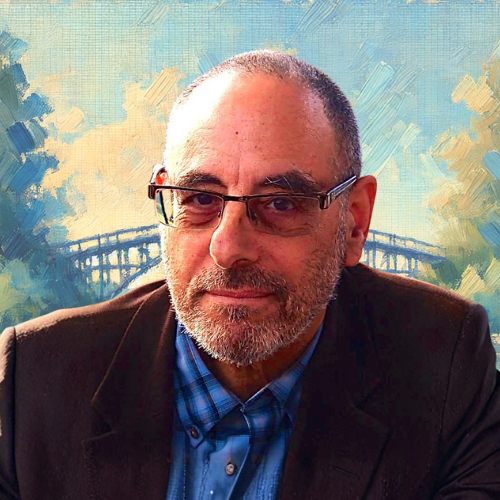 Norman Fischer is a poet, author, Zen Buddhist priest, and former abbot of the San Francisco Zen Center. As founder of the Everyday Zen Foundation (www.everydayzen.org), his work with meditation practice has taken him into many corners of contemporary American life, including the arts, education, hospice training, and lawyering as a spiritual path. Norman has worked with the Center for Understanding in Conflict on inquiries that bring the calmness and insight of meditation practice directly into conflict situations. The author of 29 books, his poetry titles include Selected Poems 1980–2013, Men in Suits, and There Was A Clattering As…. His recent and notable Buddhist titles include Training in Compassion, The World Could Be Otherwise, and, forthcoming in 2026, The Great Road: Zen Master Dogen and the Art of Continuous Practice.
Guest Practitioners
 Choku Proudfoot is a Zen Priest and currently director of San Francisco Zen Center, City Center. In the various roles Choku has held at SFZC, they have endeavored to listen deeply and find ways to support well being and creative harmony in the community. They are also always seeking to find ways to support social justice and minimize harm to the earth. As director they are always looking for ways to be a presence in the neighborhood around SFZC and will soon be on the board of their neighborhood association. Prior to moving to SFZC some six years ago, Choku spent several years at a Tibetan Dharma Center in Colorado deeply immersed in Vajrayana Buddhism. Choku has also lived in the Central Valley of California where they founded and ran Valley Yoga for sixteen years. It was during the years of immersion in the practice of yoga that Choku began their journey into meditation and Buddhist practice eventually leading them to SFZC and ordaining as a priest.
About Inside Out
Read Gary Friedman’s Book Inside Out: How Conflict Professionals Can Use Self-Reflection to Help Their Clients to learn more. Friedman presents how to access your internal selves when working with people in conflict in a way that is constructive for clients. This practical guide for conflict professionals directs the reader to pay attention to emotional clues – which can unearth unacknowledged feelings, concerns, and priorities that can be central to resolving the conflict if we understand and communicate them. Combining external dimensions with internal world (attitudes, relationships, feelings) a conflict professional and determine the best course of action for all parties involved.
This book is based on a SCPI, this program that Gary Friedman, along with colleague Jack Himmelstein (a law professor and lawyer) and Norman Fischer (a Buddhist monk) has been teaching for the last 18 years. It entails conflict professionals to consider self-reflection, challenging typical conventions of conflict professionals by replacing them with a full and deep commitment to bringing all of one’s self to serve others. Essentially – acknowledging and using self-awareness. Working from the inside out.
*Please note that trainers are subject to availability and may change prior to program start without notice. Program will also have guest lecturers and Zen practitioners.
Additional Notes
Registrations received fewer than 72 hours before the program will be accepted at the discretion of the training team due to role-play and logistics needs.
For questions, contact us at [email protected]
**Please select desired ticket and quantity using the +/- feature before clicking ‘Get Tickets.’