
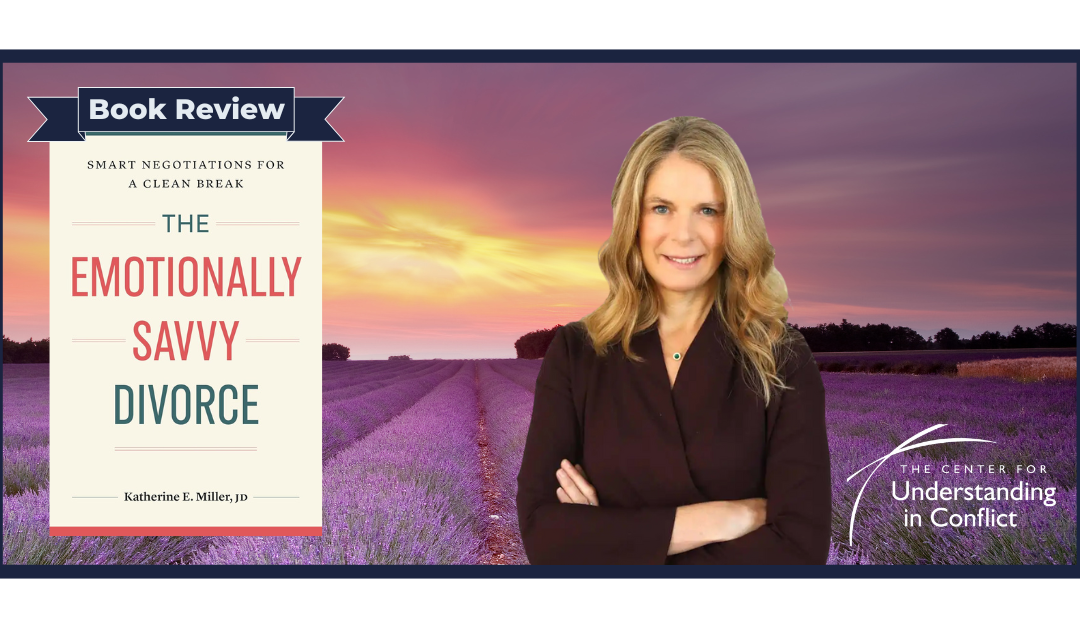
In The Emotionally Savvy Divorce, Katherine E. Miller offers a grounded and compassionate guide for people navigating one of life’s most difficult transitions. Drawing from more than thirty years of experience as a mediator and collaborative lawyer, she brings forward a perspective that honors both the emotional and practical aspects of divorce. The book invites readers to approach conflict not as something to fear or fight, but as a source of insight and a potential path toward healing.
For those familiar with the Understanding-Based approach to conflict, many of the ideas in this book will feel aligned with our core values. Katherine, a long-time practitioner and senior trainer with the Center for Understanding in Conflict, offers a model of divorce that encourages emotional honesty, shared responsibility, and a deep respect for the humanity of everyone involved.
One of the book’s central messages is that emotions are not distractions or liabilities in conflict. Instead, Katherine encourages readers to turn toward their emotions with curiosity and care. She acknowledges that feelings like anger, grief, fear, and shame often surface during divorce, but rather than asking people to suppress those emotions, she invites them to pay attention to what those feelings might reveal. This is not an invitation to dwell in pain, but to use emotional insight to clarify values and guide thoughtful decisions.
“We cannot eliminate emotions from divorce, nor should we try. Instead of pushing them away, we can learn to understand what they are telling us and use that information to make decisions that reflect who we are and what we care about”
This perspective closely reflects one of the central ideas of the Understanding-Based model: that conflict is best addressed not by avoiding it, but by engaging with it fully. The book includes many examples of clients who move through painful situations by working through—not around—the emotional and interpersonal dynamics of their separation. Katherine writes about these experiences with compassion and clarity, offering readers a sense of hope without minimizing the difficulty of the journey.
The tone throughout the book is personal and supportive. Written in clear, accessible language, it avoids legal jargon and instead focuses on helping people understand their own needs and communicate more effectively with their former partners. There are chapters on managing anxiety, building negotiation strategies, and developing proposals that reflect not just legal rights but what matters most to the individuals and families involved. These tools are practical and thoughtful, and they invite readers to take an active role in shaping the terms of their divorce.
Professionals reading the book will likely appreciate its emphasis on interests over positions. Readers are guided to explore not just what they want, but why it matters to them. This is a key principle in the Understanding-Based model, where we help parties move beneath the surface of the conflict to better understand themselves and one another. In this way, the book supports deeper engagement and helps lay the foundation for creative and satisfying solutions.
“Fairness is in the mind of the beholder – but we agree on what is beautiful much more easily than we agree on what is fair. Because we only want what is fair and cannot agree on what that means, we feel the other person is treating us unfairly, leading to feelings of anger and hurt.”
That said, readers who are already steeped in the deeper layers of conflict work may notice that some dynamics are touched on lightly. For example, while the book acknowledges the complexity of emotional reactivity and conflict patterns, it does not fully explore how entrenched narratives and identities can influence the negotiation process. This may leave some professionals wanting a more nuanced discussion, especially in cases where conflict has been ongoing or deeply entrenched. Still, given the intended audience of people navigating divorce on their own, the level of detail feels appropriate.
One particularly thoughtful element of the book is the way it addresses the idea of fairness. Katherine notes that people often believe they are acting reasonably and fairly, even when their perspectives are in sharp conflict. Rather than trying to resolve this tension by declaring one side right, she invites readers to examine the values that inform their understanding of fairness. This is an important move that helps people step out of rigid thinking and makes room for more open dialogue.
The role of professionals in divorce is also handled with care. Katherine acknowledges the ways lawyers and other advisors can either contribute to conflict or help ease it. She advocates for a more collaborative and client-centered approach, one that supports people in finding their own answers rather than imposing solutions. For those of us working within the Understanding-Based model, this is a familiar and welcome perspective.
The Emotionally Savvy Divorce does not promise an easy path, but it does offer steady guidance. It helps readers understand that they are not alone, and that there are ways to move through even painful transitions with dignity and self-awareness. The book encourages reflection, dialogue, and informed decision-making, and it does so in a way that respects each person’s unique story and needs.
While no single book can address all aspects of divorce or all the challenges of conflict, this one makes a meaningful contribution. It may be especially helpful for clients who are open to a more mindful and engaged approach to divorce. And for professionals, it offers a reminder of what becomes possible when we center understanding in our work.
Our thanks to Katherine for providing an advance copy of The Emotionally Savvy Divorce for review.