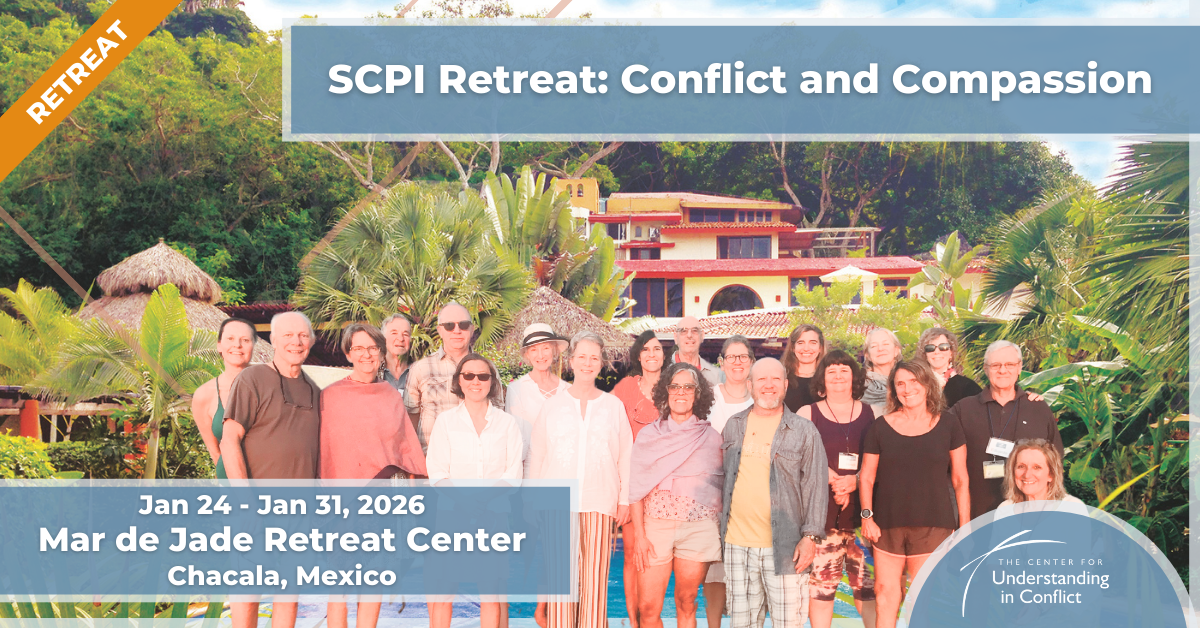
Join Us for SCPI: Conflict and Compassion
A Retreat for Reflection, Resilience, and Renewal
In a world where the challenges around us—from climate change to political division to daily interpersonal tensions—can feel overwhelming, how do we stay connected, grounded, and engaged without losing ourselves?
At Conflict and Compassion, a Self-Reflection for Conflict Professionals Intensive (SCPI) retreat, we invite you to step away from distractions and overwhelm and into a space of deeper listening—both inward and outward. Together, we will explore how our emotional reactions shape how we show up in our lives and our work. By turning towards these reactions with curiosity and care, we can cultivate a greater sense of resilience, clarity, and compassion. Together, we will immerse ourselves to understand how to use these emotions to cope, survive and flourish and help others to do so.
This retreat is especially for those who regularly engage with conflict—mediators, therapists, lawyers, human resource professionals, activists, journalists, leaders, and caregivers. Whether we want to or not, we bring our full emotional selves into the room: frustration, fear, heartbreak, and sometimes hope. These feelings, often hidden or ignored, can become powerful allies in helping us connect more authentically—with others and with ourselves.
View this video for more information about Mar de Jade
Dates:
- Saturday, January 24, 2026 through Saturday, January 31, 2026.
- Our first session will be on the morning of January 25 to allow for travel to Chacala on January 24 and we will end on the evening of January 30 to allow for return travel on January 31.
Training fee:
- The training fee (not inclusive of accommodation) is $1,695.
- A $500 deposit is required to hold your place. If a deposit is made, the remaining balance is due by November 1, 2025.
- If registering after November 1, 2025, payment in full is required at the time of registration.
TRAINING FEE REGISTRATION
(Housing is booked separately – see below)
Accommodation and Facility fee:
Logistics:
- Housing and meals – includes 7 nights accommodations and 3 delicious buffet style meals per day.
- The following are extra and optional: bar drinks, spa treatments, and gratuities.
- Pick-up and transportation from and to the Puerto Vallerta airport is available at an additional cost.
- Excursions are available during our long afternoon break at an additional cost.
- Please visit here for Mar de Jade’s cancellation policy and other FAQs.
Hansa Patel is an attorney, mediator, and teacher. As an attorney, Hansa zealously advocated for abused and neglected children or defended their parents’ rights in the San Francisco juvenile dependency court for fourteen years. Hansa is passionate about serving the underprivileged community. Feeling depleted by the court system, Hansa explored new ways to empower her clients to resolve conflict. Mediation empowers Hansa’s clients to choose how they want to engage with conflict, co-create resolutions, and even transform a relationship. In the USA, Canada, and Africa, Hansa teaches mediation, including integrating mindfulness skills into conflict resolution. Hansa wants her clients to have the same tools she cultivates in her children: a mindful approach to resolving challenges in life.
Catherine Conner has been a mediation and collaborative practice trainer since 2004. She is a frequent presenter at collaborative conferences and family law workshops. She authored Collaborative Practice Materials with Steven Neustadter and Margaret Anderson. Catherine Conner’s private practice focuses on family law alternate dispute resolution, including mediation, collaborative practice, and private judging. She graduated from the UC Berkeley School of Law in 1982 and is a founding partner of Conner, Lawrence, Rodney, Olhiser & Barrett, LLP. In 1992, Catherine became a Certified Family Law Specialist. She has been honored as the recipient of the Rex Sater Award for Excellence in Family Law, the Eureka award by Collaborative Practice California and was the 2018 honoree for Careers of Distinction. She was on the Board of Directors of the International Academy of Collaborative Professionals from 2007-2014 and served as the President in 2013.
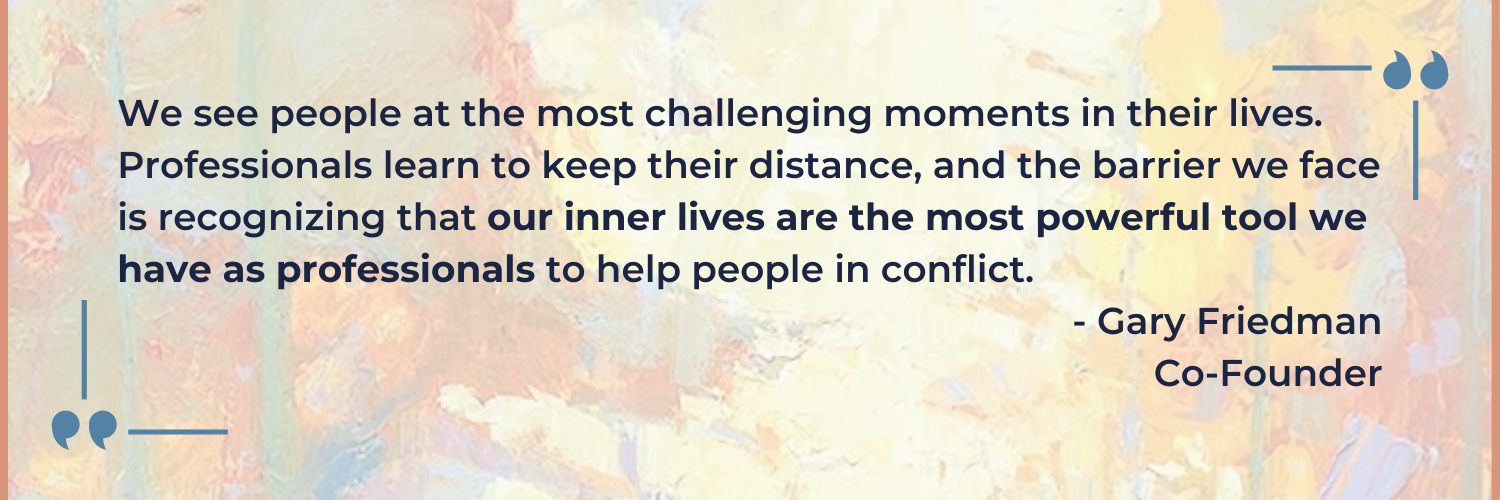
Gary J. Friedman has been practicing law as a mediator with Mediation Law Offices in Mill Valley, California since 1976, integrating mediative principles into the practice of law and the resolution of legal disputes. Co-founder of the Center for Understanding in Conflict (formerly the Center for Mediation in Law), he has been teaching mediation since 1980. Prior to his work as a mediator, he practiced law as a trial lawyer with Friedman and Friedman in Bridgeport, Connecticut. After several years as an advocate, he sought a new approach to resolving disputes through increasing the participation of the parties in the resolution of their differences. At that time, he and his colleague, Jack Himmelstein, began to develop the Understanding-based model that is now practiced extensively in the United States and Europe.
Norman Fischer is a poet, author, Zen Buddhist priest and former abbot of the San Francisco Zen Center. As founder of the Everyday Zen Foundation (www.everydayzen.org), his work with meditation practice has taken him into many corners of contemporary American life including the arts, education, hospice training, education, and lawyering as a spiritual path. Recently, he began offering meditation training to engineers at Google. Norman has worked with the Center for Understanding in Conflict on inquiries that focus on bringing the calmness and insight of meditation practice directly into conflict situations. Norman has written 29 books. His latest books are Untitled Series: Life As It is and The World Could Be Otherwise: Imagination and the Bodhisattva Path.
Going Inside to Help Those Outside with Gary Friedman
Mindfulness in Mediation with Norman Fischer
Mindfulness & Understanding with David Dörken
About Inside Out
 Read Gary Friedman’s Book Inside Out: How Conflict Professionals Can Use Self-Reflection to Help Their Clients to learn more.
Gary Friedman presents how to access your internal selves when working with people in conflict in a way that is constructive for clients. This practical guide for conflict professionals directs the reader to pay attention to emotional clues – which can unearth unacknowledged feelings, concerns, and priorities that can be central to resolving the conflict if we understand and communicate them. Combining external dimensions with internal world (attitudes, relationships, feelings) a conflict professional and determine the best course of action for all parties involved.
This book, is based on a program that Gary Friedman, along with colleague Jack Himmelstein (a law professor and lawyer) and Norman Fischer (a Buddhist monk) has been teaching for the last 18 years. It entails conflict professionals to consider self-reflection, challenging typical conventions of conflict professionals by replacing them with a full and deep commitment to bringing all of one’s self to serve others. Essentially – acknowledging and using self-awareness. Working from the inside out.
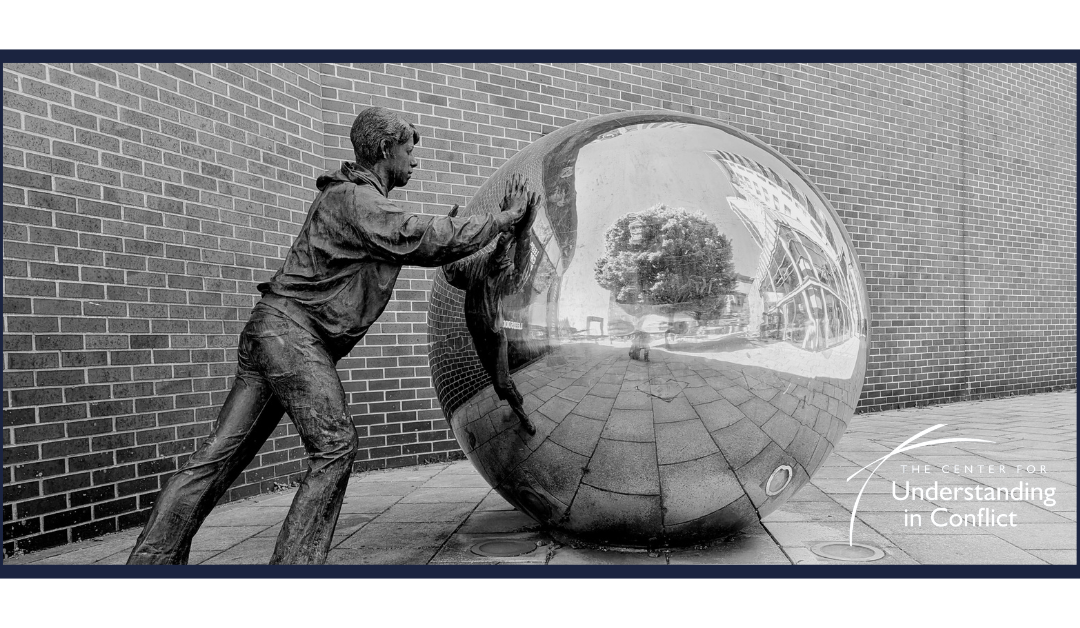
The Importance of Self-Reflective Practice and Community in Conflict Work
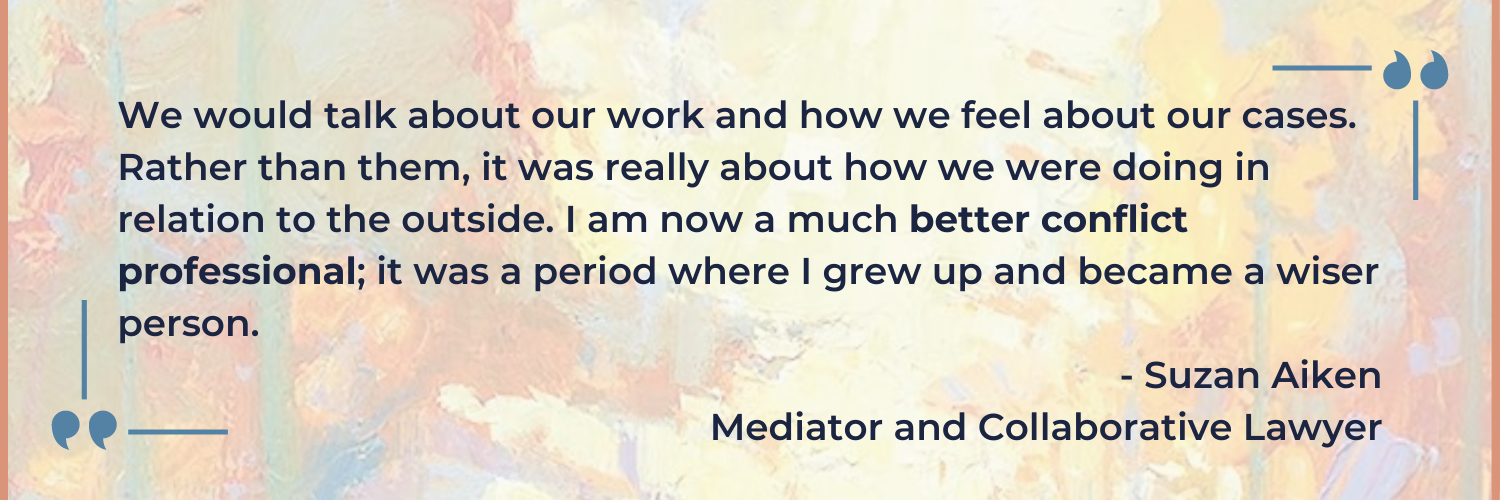
People who choose to work with conflict often do so from a place of deep care. Something in them is drawn toward human struggle, repair, dialogue, and the possibility of movement where others see only “stuckness.” That commitment is meaningful, but it is not simple. The work of supporting people in conflict does not ask only for skill or good intentions. It asks for ongoing self-reflection and the willingness to stay in relationship with others who are engaged in that same effort.
Self-reflective practice matters because conflict work is never only external. Even when our attention is on clients, colleagues, or communities, we are always bringing ourselves into the room. We bring our histories, our identities, our hopes, our fears, our assumptions, and our learned ways of responding to tension. We bring the parts of ourselves that long to help, protect, guide, fix, or soothe. If we do not make space to understand these deeper impulses, they can quietly shape our work in ways we do not fully see.
For many practitioners, the desire to work with people in conflict is rooted in something personal as well as professional. Some know conflict intimately from their own lives and feel called to help others find a different path. Some are moved by a longing for justice, dignity, or connection. Some are trying, consciously or not, to repair something in the world that has caused harm in their own experience. None of this is a problem. In fact, these deeper motivations often contain the heart of one’s commitment. The challenge is not that they exist, but that they can remain unexamined.
Self-reflective practice creates a way to compassionately connect with and understand those inner drivers. It allows us to ask not only what we do in conflict, but why. Why do certain interactions pull so strongly on us? Why do we feel especially protective of one person’s experience over another’s? Why do we become activated by certain tones, stories, or dynamics? Why do we sometimes feel compelled to move the conversation in a particular direction? These questions are not meant to produce shame or self-criticism. They are invitations to greater honesty and depth.
That honesty becomes even more important when we consider the many histories, positions, and intersections we each carry. No one comes to this work from a neutral place. Our social identities, cultural backgrounds, class experiences, family systems, and professional roles all affect how we interpret conflict and how others experience us. Self-reflective practice helps us become more aware of those influences, not so we can erase them, but so we can relate to them with humility and care. It helps us recognize that our perspective is shaped, partial, and alive with meaning.
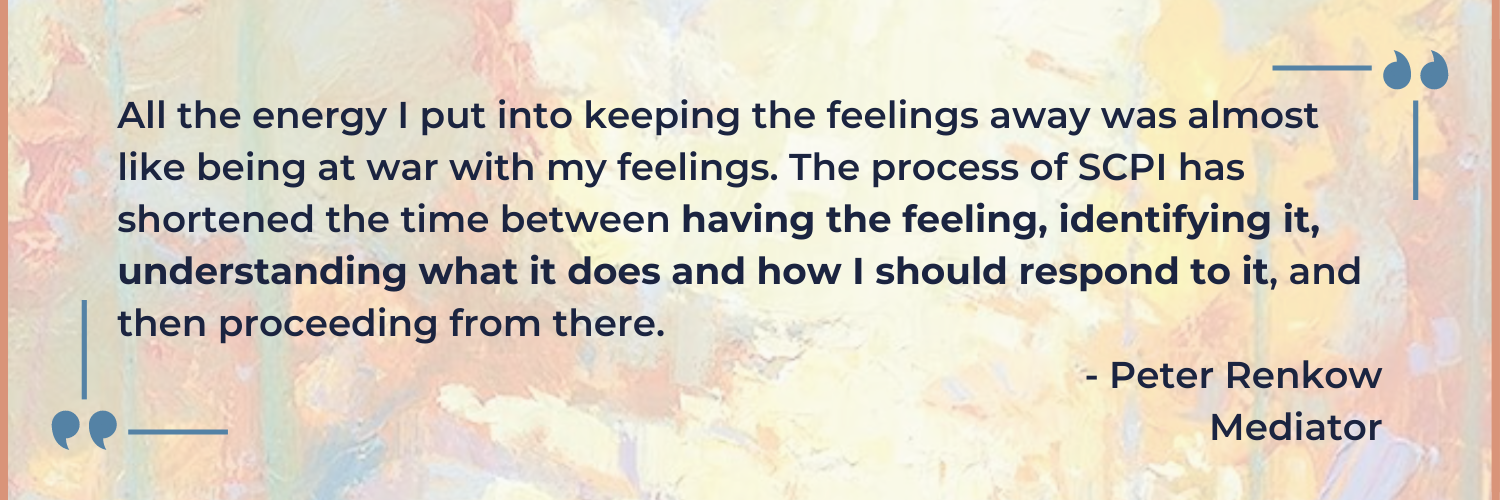
This kind of practice also brings us face to face with barriers to self-understanding and constructive presence. General reactivity is one of the most common. When tension rises, we may become mentally flooded, emotionally contracted, or overly certain. We may judge quickly, withdraw inwardly, or feel an urgent need to regain control. Insecurity can show up as overpreparing, overperforming, or needing to be seen as competent and helpful. Anger can narrow our field of vision and harden our responses. Judgment can distance us from the very people we are trying to support. The desire for control can quietly replace curiosity with management.
These barriers are deeply human. They do not mean we are unsuited for conflict work. They mean we are people doing demanding work that touches vulnerable places in us. The goal of self-reflective practice is not to eliminate every difficult response. It is to notice them sooner, understand them more deeply, and work with them in ways that bring us closer to ourselves rather than further away.
That compassionate turning toward ourselves is essential. If we only meet our reactivity with criticism, we tend to become more defended, not more open. If we judge our insecurity harshly, we often deepen the very fear we are trying to overcome. But when we can slow down and meet those barriers with interest and steadiness, something shifts. We begin to see that beneath control may be fear, beneath judgment may be hurt, and beneath anger may be grief or helplessness. That understanding does not excuse harmful behavior, but it does create the possibility of transformation.
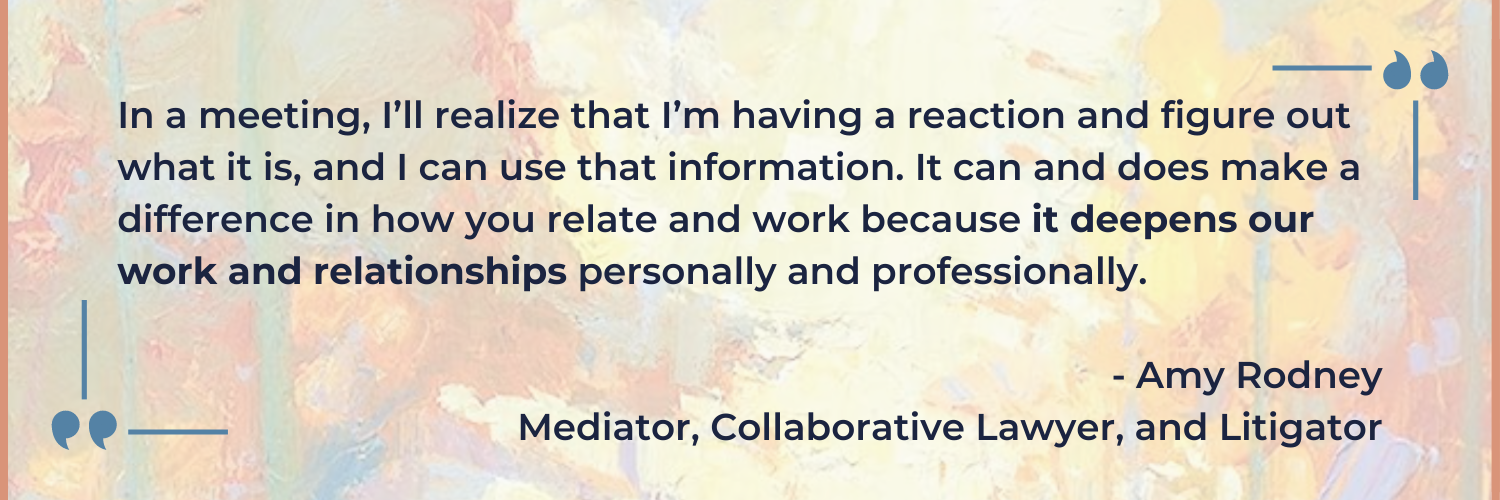
Community plays a vital role in this process. Self-reflection can begin in solitude, but it rarely deepens there alone. We need spaces with others who are also committed to examining themselves in the context of conflict work. In a reflective community, we are reminded that our struggles are not unique failures but shared human challenges. We gain language for experiences that once felt confusing or isolating. We are witnessed, challenged, and supported by people who understand the weight and complexity of the work.
Being in community also helps interrupt the illusion that growth is a private achievement. We learn through dialogue, through being seen by others, and through hearing how they make sense of their own reactions and histories. We become more able to notice our blind spots because others, with care, help us see what we cannot see alone. In that kind of environment, reflection becomes more than introspection. It becomes a living practice of accountability, humility, and connection.
Ultimately, self-reflective practice and community help us bring a more grounded presence to the people we serve. They help us stay closer to ourselves when conflict feels charged. They help us meet clients with less judgment and more openness. They strengthen our capacity to remain human in the face of pain, complexity, and uncertainty. In conflict work, that kind of presence is not secondary. It is part of the work itself.
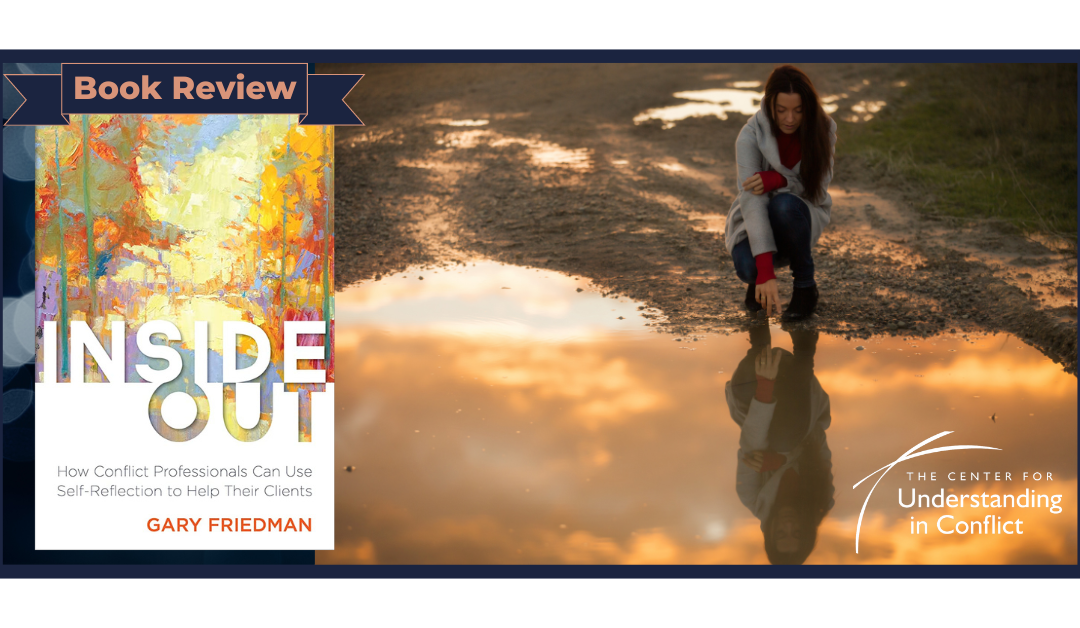
Inside Out: How Conflict Professionals Can Use Self-Reflection to Help Their Clients
Inside Out: How Conflict Professionals Can Use Self-Reflection to Help Their Clients by Gary J. Friedman is an insightful and thought-provoking book authored by a renowned expert in conflict resolution. This book serves as a valuable guide to understanding the crucial role of self-reflection in helping clients navigate challenging conflicts with a focus on the personal and internal dimensions of conflict resolution. When working with clients, Friedman emphasizes the importance of conflict professionals examining their biases, beliefs, and emotional responses. By delving into self-reflection, practitioners can better understand their triggers and how they may influence their interventions. This awareness ultimately enhances their ability to guide clients and effectively manage conflicts neutrally and empathetically.
Written in an engaging and accessible way, Inside Out makes the concepts and ideas presented throughout easily relatable, and real-life case studies and practical examples effectively demonstrate the application of self-reflection techniques in conflict resolution scenarios. These anecdotes help readers connect theory to practice, making the book a valuable resource for experienced professionals and those new to the field. One of the most compelling aspects of this book is its emphasis on the interconnectedness of personal and professional growth. The author makes a convincing argument that conflict resolution practitioners must embark on their own journey of self-discovery and growth to assist their clients effectively. While sharing his own experiences and insights, Friedman encourages readers to engage in self-reflection, promoting a culture of continuous learning and development within the conflict resolution profession.
Another strength of Inside Out is its comprehensive exploration of various self-reflection techniques and strategies. The book offers a range of practical exercises, reflection prompts, and assessment tools that conflict professionals can utilize to enhance their self-awareness. These resources enable readers to engage actively with the material, fostering personal growth and transformation. Moreover, the book guides integrating these self-reflection practices into daily professional routines, ensuring sustained development. Inside Out also addresses the potential challenges and ethical considerations that may arise when employing self-reflection in conflict resolution and encourages practitioners to navigate the fine line between self-awareness and self-indulgence, highlighting the importance of maintaining professional boundaries and accountability. By presenting these challenges alongside practical solutions, the book equips conflict professionals with the necessary tools to navigate the complexities of their roles ethically.
Inside Out: How Conflict Professionals Can Use Self-Reflection to Help Their Clients is an exceptional resource for conflict resolution practitioners seeking to enhance their effectiveness. Through its exploration of self-reflection techniques and strategies, the book empowers professionals to examine their biases, emotions, and triggers, ultimately enabling them to assist their clients better. With its practical approach, engaging writing style, and comprehensive coverage of the subject matter, this book is a must-read for anyone working in the field of conflict resolution.