As we step into 2026, many of us in the conflict resolution field find ourselves pausing to reflect. It’s a natural moment to assess how we want to grow, how we want to work, and what kind of support we need to continue doing this work in a sustainable and fulfilling way. For those of us practicing independently or in settings where opportunities to regularly connect with like-minded colleagues are rare, this reflection often reveals a gap: the absence of a consistent, nourishing professional community.
Conflict work, at its core, asks us to hold complexity, emotion, and uncertainty with steadiness and care. Whether we’re mediators, attorneys, coaches, or facilitators, we spend our days supporting others as they wrestle with hard decisions and raw emotions. But who holds us in that same way? Where do we bring the questions that stay with us after a difficult case, or the sense of isolation that can creep in when we’re practicing on our own?
The truth is, we need each other. Not only for collaboration or occasional brainstorming, but for something deeper: shared reflection, learning through experience, and the kind of professional intimacy that develops when a group commits to showing up for one another over time.
This kind of connection doesn’t just feel good – it makes us better practitioners. A space where we can speak candidly, listen generously, and offer feedback without fixing fosters a different kind of learning. We begin to see more clearly how we’re showing up in the room, where we’re getting stuck, and what’s underneath our patterns. And in hearing the struggles of others, we find resonance with our own, often discovering new perspectives that shift our approach in subtle but meaningful ways.
We’ve seen over and over again how transformative these kinds of groups can be when they’re intentionally structured and grounded in the principles we hold dear. They offer something rare: not a course, not a training, but a shared practice space – a place to bring real-world challenges, explore questions that don’t have easy answers, and reconnect with the “why” behind our work.
For those trained in the understanding-based model, the need for this kind of group is even more essential. This approach invites us to move differently in conflict – to go toward what’s hard, to stay in the room, to trust the power of understanding rather than persuasion. But sustaining that stance, especially in environments that default to adversarial or directive norms, can feel lonely without community reinforcement.
Even seasoned professionals can benefit from these spaces. Experience brings confidence, yes, but also the humility to recognize there is always more to uncover – about our clients, our cases, and ourselves. In an environment of mutual respect and shared commitment, even long-practiced mediators and conflict professionals find new layers of insight.
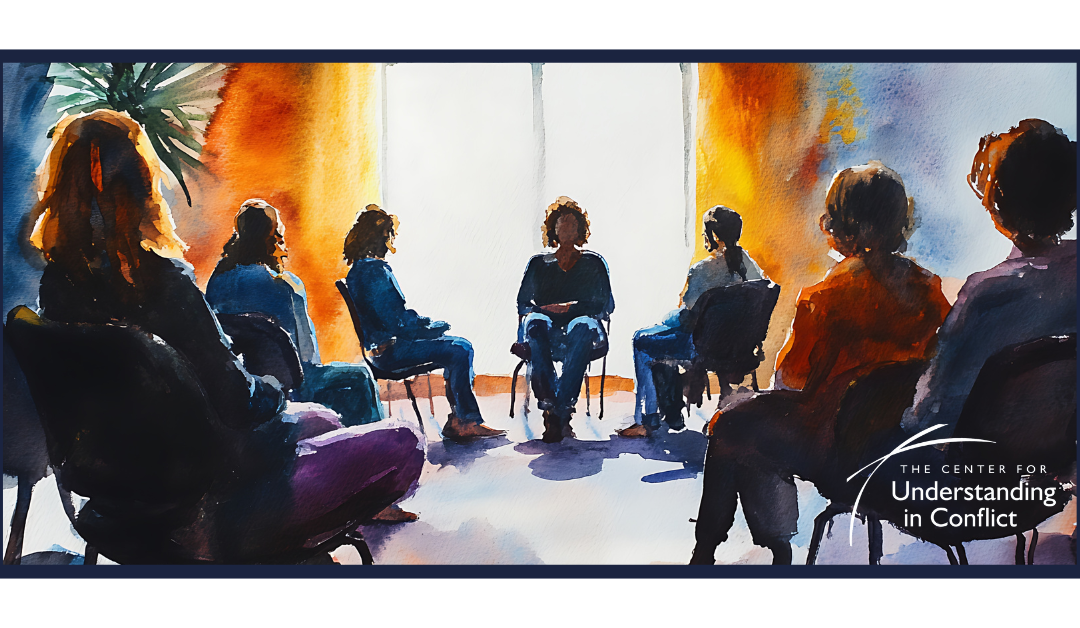
This is the kind of environment the Support and Development Group at the Center for Understanding in Conflict is designed to create. It’s not a training in the traditional sense, and it’s not a drop-in discussion. It’s a committed group of professionals – small by design – who come together over several months to bring their most pressing questions and cases to the group. With skilled facilitation and a foundation in the understanding-based model, participants have space to reflect on their work, explore where they feel stuck, and receive honest, thoughtful support from others who understand the terrain.
What emerges from these sessions is not just sharper skills, but renewed energy, deeper insight, and often, a sense of camaraderie that sustains long after the meetings end.
If you’ve been longing for a space to show up not just as a professional, but as a person doing meaningful and often challenging work – a place where you don’t have to explain the basics, where your colleagues understand the weight of what you carry and are curious about how you carry it – this might be the time to explore what’s possible when you’re not doing it alone.
As this new year begins, it’s a good moment to invest not just in what you do, but in how you grow. Whether you’ve been practicing for two years or twenty, stepping into a space of mutual support and reflection may be just what’s needed to deepen your presence, refine your practice, and reconnect with the purpose that brought you to this work in the first place.
And you don’t have to look far – opportunities to do just that are closer than you might think.